Pages

Showing posts with label Free Cell Phone Service. Show all posts

Sunday, 6 August 2017

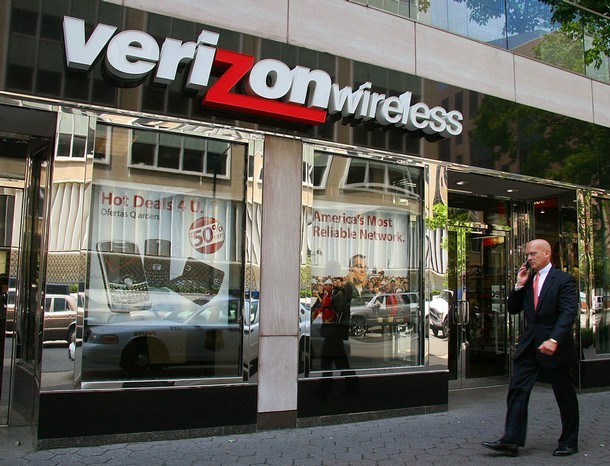
Verizon Getting in Charter’s Way to Expansion and Build Out


Among all the leading telecom service providers, there prevails a monopoly of one government cell phone service provider or the other. To maintain this monopolist position, the telecom giants often go out of their way to be an impediment in the services of others.
The exact thing happened recently when Verizon was seen coming in Charter’s way. Let’s see what happened.
Verizon Being an Obstacle in Charter’s Expansion
Now, the problem arises with Charter’s move of expansion where the company needs to attach its equipment and wiring to roadside poles in order to provide customers with its services. The expansion is to be carried out in New York State.
The services to be offered by Charter include internet service and TV services offered by the company.
The issue arises because most of these roadside poles are either owned or co-owned by Verizon. Thus, to give Charter a chance to deploy its equipment on these poles, Verizon, the leading government cell phone service provider, has to take its own equipment down from a number of them.
For this, Charter Communications has evidently submitted 822 applications for pole attachments to Verizon. These applications included attachment requests for around 55, 856 poles. Along with the applications, Charter has also paid application fees of $409,296 to Verizon.
Now, besides this, Verizon – that is known for its government cell phone planhas been giving a hard time to Charter in the approval of the applications.
Out of the 822 applications, only 179 have been approved by Verizon to date. According to a complaint sent to the PSC by Charter, even after receiving the application fees, the government cell phone service provider isn’t taking the desired actions.
It has been seen that after the acquisition of Time Warner cable by Charter Communications, the company is bound to expand to new areas and Verizon is being a great obstacle in its way.
According to Charter, Verizon is doing so for competitive reasons as the company, while being celebrated for its government cell phone plans, also offers TV services through its FiOS cable TV.
This clearly shows that Charter’s TV and Internet services are bound to clash with that of Verizon’s in the capital region and this is evidently dodged by the leading government cell phone service provider – Verizon.
What Verizon Has To Say
While being accused of deliberately delaying its work on pole requests by Charter, Verizon denies the matter completely.  
According to Verizon’s spokesperson Raymond McConville, "We have been more than cooperative and even presented Charter with options to speed up their construction efforts,"
"For them to try to shift blame is puzzling at best. We stand ready to continue to assist them and again provide them with the methods to speed things up”, he added.
In a Nutshell
If Verizon is deliberately getting in Charter’s way, the reasons are pretty loud and clear. However, because of these reasons, the internet users that have opted for Charter’s services might suffer because of Verizon’s level of cooperation. 

Monday, 15 May 2017

Sprint Boosts Network, Creating 500 Jobs by Adding 105 New Stores

The free Government cell phones provider, Sprint, is planning to open 105 new mobile stores in locations, like Rosemont, Schaumburg, Skokie and Oak Lawn. It will hire 500 employees to staff in these stores.

“We knew we had to add more Sprint and Boost Mobile stores for both our postpaid and prepaid customers,” Jim Mills, Sprint president of Illinois and Wisconsin, said in a statement. “Chicagoans are seeing our network and customer care improvements.”

This Government assistance cell phone company requires more brick-and-mortar stores to meet the growing demands of the people.


Sprint will also augment its Chicago regional network by providing customers the Sprint Magic Box. This device is a wireless small cell that can boost the ability of the network to download and upload data inside homes and businesses.

The first test site for its upgraded network was the Lombard suburb of Chicago with Magic Boxes for outdoor use, indoor small cells and other network advancements. This device allows faster data downloads, thereby, showing significant improvement for video streaming.

“The combination of all of these new technologies will help Sprint densify quicker and it will provide customers an improved experience inside their business and homes while on the Sprint network,” Scott Santi, Sprint vice president of network for Central Area, said in a statement. “We’re extremely excited about the results we’ve already seen in Lombard and nationally.”

Sprint is looking to compete with other giant free Government cell phones providers by providing assistance to customers having several smart devices in their homes or businesses. According to Sprint, data usage of its customers has risen over 1,254 percent in the last five years in the Chicagoland area.

Sprint, AT&T and other wireless providers are striving hard to augment network capacity in order to cover consumer demand, particularly of people using many devices in the same household or business.

The added cells and network enhancements at Sprint is a great step to offer faster downloads for data, particularly better streaming for video without delaying.

The network improvements around the region, and countrywide will take place in the next 24 months. These upgrades may lay the foundation for the coming of 5G, or the next generation of wireless.

See Also: T-Mobile, Government Cell Phone Service Firm Starting 5G in US in 2019

"We need to add these steps now to the foundation in order to go to 5G," said Brian Moran, director of site development for Sprint.

Subscribers who want to enjoy the benefits of the Sprint Magic Box would need to fill out a form. The box is free, Moran said.

Sprint’s new mobile stores will provide employment to a large number of people. Additionally, its efforts to offer an advanced network consisting of alluring features will engage an enormous number of customers.

Monday, 27 March 2017

Verizon, an Elite Government Cell Phone Service Provider Brings Back the Unlimited Plan

Verizon is an elite Government cell phone service provider and has now resurrected their unlimited data plan, which hasn’t been available since July 2011. This Government assistance cell phone service provider reintroduces this plan to remain in the league of the fierce competition between the top cell phone service companies.

David Eger, a senior equity analyst with Edwards Jones says “Verizon was sitting out here as the only one that didn’t have an offering,” since all the giant cell phone service companies, like AT&T, Sprint, and T-Mobile offer unlimited plans.


What Drives Verizon to Come Out With this Plan?

Verizon is bringing back unlimited data, and its general competitive strategy due to last quarter’s statics. The report says that T-Mobile has added 857,000 and Sprint added 347,000 customers, while Verizon lost 36,000 subscribers. So, the company is expecting that their new plan will significantly bestow a positive impact in the upcoming quarter.

Price Comparisons between Different Government Cell Phone Service Providers

The price of the Government cell phone service provider Verizon’s new plan is $80 for one line and $180 for four lines. It is more costly than Sprint and T-Mobile that offer the single line for $60 and $70 and the 4 lines for $160. AT&T has a single line price of $100, whereas for four lines, the customers will pay $180.

People’s response to the Verizon’s Unlimited Plan

Investors see many benefits of this cell phone service company’s new plan. People are excited about the new plan, leading to new customers. Though this plan has only been around for a very short time, Verizon’s President of Operations John Stratton at a Deutsche Bank conference said “we’ve seen a pretty huge rush to unlimited.” Today, people do not look for a cell phone service carrier offering the maximum data, but go for the fastest and most reliable service provider. And Verizon outshines in this scenario as the company has been getting a lot more attention from customers, investors, and the media due to satisfactory services.

See Also: How Government Cell Phone Service Provider Verizon’s Unlimited Plan Affects T-Mobile

Drawbacks for Verizon due to its Unlimited Plan

Undoubtedly, the cell phone service company Verizon will get more customers, but its top paying customers’ bills will go down significantly. Customers using enormous data and paying penalties frequently due to exceeded data allowance can now pay a flat fee for the unlimited data and avoid all penalties. Also, Verizon will have to spend a hefty amount of money on maintaining a superfast network. The company will be spending $11.3 billion in the upcoming months to maintain the high speed network. This is much more than T-Mobile, which is spending $5.1 billion.

Conclusion   

The Verizon unlimited plan is more expensive than T-Mobile, but it is justified due to the superior network. People are flocking to its new plan due to the exceptional benefits. The appetite of customers to watch YouTube videos, go on Facebook, and send Snapchats will keep increasing in the future. At a time when data usage is on the rise, providing an unlimited data plan is inherently risky, but Verizon made the move to remain competitive.

Tuesday, 14 March 2017

AT&T Launches Stream Saver Video Regulating Feature

AT&T is an elite name, offering exceptional cell phone service and other plans to its customers. Recently, this cellular phone service provider has launched a new Stream Saver feature for its customers.
Details About AT&T

AT&T Inc. is an American multinational telecommunications corporation, located at Whitacre Tower in downtown Dallas, Texas. It is the second largest mobile telephone services provider and the largest fixed telephone services provider in the United States. It is the largest telecommunications company in the world by revenue. AT&T has maintained a good name by offering exceptional cell phone service and other plans to its customers. It also offers broadband subscription television services through DirecTV. 

AT&T is the third largest company in Texas, and as of February 2017, it is the 12th largest company globally as analyzed by a composite of revenues, assets, profits, and market value, and the 12th largest non-oil company. As of 2017, it is also the 18th-largest mobile telecom operator worldwide, with 135 million mobile customers. It was ranked at 4 as the world's most valuable brands published by Brand Finance for the year 2017.

AT&T Inc. started its foundation as Southwestern Bell Corporation, one of the seven Regional Bell Operating Companies formed in 1983 in the divestiture of the American Telephone and Telegraph Company following the 1982 United States v. AT&T antitrust lawsuit. In the year 1995, Southwestern Bell transformed its name to SBC Communications Inc. In 2005, SBC bought previous parent AT&T Corp. and took on its branding, with the combined entity naming itself AT&T Inc. and using the iconic AT&T Corp. logo and stock-trading symbol.

This is the brief history of the renowned cellular phone service provider,  AT&T. Now, let’s talk about its latest stream saver video regulating feature:

Back in November we heard the first news of AT&T's Stream Saver feature. When it is activated, the HD video (720p) is reduced to standard video (480p), offering DVD quality video. In this way, the users with a data bucket can save some data while viewing streaming videos. This feature is now automatically enabled on AT&T and GoPhone pre-paid plans.

The stream saver video regulating feature is on by default. So, customers can turn Stream Saver off by visiting the AT&T website and its “Manage my data” account page. Once it is turned off, wait for five minutes and then perform a complete smartphone reboot for the change to fully take effect.

You can even sign up to use AT&T’s standalone unlimited plans. This will consist of the carrier’s $90 a month Unlimited Plus plan, supporting HD video streaming, though total download speeds are reduced for the rest of the month after consuming over 22GB data per billing cycle.

See Also: Get Verizon's 5G broadband service for Free

If you are using the carrier's Unlimited Plus data plan, you will want to disable Stream Saver immediately  because it streams video without limits at a 720p resolution. If you are subscribed to AT&T Unlimited Choice, you do not have to make any changes since streaming is done at 480p.

There is a mixed response to AT&T’s new feature. Let see how it works in the future.

Tuesday, 14 February 2017

Get the Earnings Preview and Know What to Expect From Sprint

Sprint, a cellular phone service provider, releases its earnings, and is currently trading around $9.43. This telecom giant hit it’s record high of $69.10 in 1999. The stock still lags behind its 1999’s stock record. But it can easily move higher by posting strong numbers. Below are the details of what the Street is expecting:

Earnings Preview:

Sprint, a cellular phone service provider, is anticipated to report the loss of ($0.08)/share on $8.32 billion in revenue. Meanwhile, the whisper number, which is the Street's unofficial view on earnings, is a projected loss of $0.10.

Company Profile & Various Businesses:

Sprint Corporation (Sprint) is a Government cell phone service provider, incorporated on October 5, 2012. The Company, along with its subsidiaries, is a communications firm delivering numerous wireless and wireline communication products and services to consumers, Government subscribers, businesses, and resellers. It works through two segments, namely Wireless and Wireline.

Sprint provides wireless and wireline services to subscribers residing in 50 states. Puerto Rico, and the United States Virgin Islands come under its corporate brand, which includes its retail brands of Sprint, Virgin Mobile, Boost Mobile, and Assurance Wireless. Their wireless service is provided using several technologies, such as third generation (3G), code division multiple access (CDMA), fourth generation (4G) services, and Long Term Evolution (LTE).


Wireless

Sprint, a Government cell phone service provider, delivers wireless services on a prepaid and postpaid payment basis to retail subscribers and also on a wholesale basis. The sale of wireless services that use the Sprint network, however, are sold under the wholesaler's brand.

In its postpaid portfolio, it bestows several Government cell phone plans to both consumer as well as business subscribers. It also provides family plans, covering multiple service lines under one account. Sprint delivers these plans with subsidy, installment billing or leasing programs.

Sprint’s prepaid portfolio covers multiple brands to allure a specific subscriber’s uses and demographics. Boost Mobile chiefly assists subscribers with plans offering unlimited text and talk with step pricing, according to their preferred data usage.

Virgin Mobile offers control and connectivity through diverse plan options. It is also labeled as a Lifeline-only Eligible Telecommunications Carrier in several states and offers service for the Lifeline program under the Company's Assurance Wireless brand.

To get the Lifeline Program, it is essential for applicants to qualify under certain eligibility requirements. Also, the existing subscribers have to recertify to those requirements yearly.

See Also: Sprint, Cellular Phone Service Provider Cuts the Price of Unlimited Data Plan

Wireline

Sprint, a cellular phone service provider, offers a suite of wireline voice and data communication services to other communications companies and targeted business subscribers.

It’s Wireline segment delivers voice, data and Internet Protocol (IP) communication assistance to its Wireless segment. It offers long distance services and operates all-digital global long distance and Tier 1 IP networks. Its services and products consist of domestic and international data communications using a myriad of protocols, including the following:
•    Multiprotocol label switching technologies (MPLS),
•    IP
•    Session Initiated Protocol (SIP)
•    Voice over Internet Protocol (VoIP)
•    Managed network services
•    Traditional voice services

Its IP and wireless services can be combined together.

Competitors:

Sprint, a Government cell phone service provider, competes with several firms, including AT&T, T-Mobile, Verizon Communications, CenturyLink and Level 3 Communications, Inc.

Wednesday, 4 January 2017

Verizon Wireless Agrees to Roll out Update to Brick Samsung’s Galaxy Note7


Verizon Wireless seems to be changing its tunes very soon. The cellular service provider has decided to issue a software update. This software update will affect its remaining customers using the Samsung Galaxy Note 7 phones.

What is actually cooking?

Samsung had issued a worldwide Note7 recall during the month of September 2016 because of battery issues. The compact body of the Note7 was causing some of those smartphones to catch fire in many parts of the world. An overheating problem was also identified. The company somehow came up with some solutions to the problem but, those solutions did not work at all. Samsung even tried to solve the problem by giving replacement units to the customers who returned their phones to the company. But even the replacement units had their own problems. This forced Samsung to issue a second global recall of the Note7 and permanently stop its production. Almost 93% of Samsung Galaxy Note7 owners returned their phones to Samsung and to their respective cellular phone service providers.

Samsung officially announced its plan about issuing an update for the rest of the 7% of the Galaxy Note7 owners. The company took this step with the objective of ensuring that the remaining 7% of the Galaxy Note7 owners turn their phones in. This specific update prevents the phone from charging and functioning as a mobile device.

Verizon Wireless Initially Refused to Issue This Update:

The largest cellular phone service provider in United States had initially refused to issue this update for its customers using the Samsung Galaxy Note7 phone because it will be a huge inconvenience for those that chose not to switch to some other phone. 

Verizon Wireless has Delayed This Update

However, Verizon Wireless Cell Phone Service users will not get this update because the company has delayed it. The company wants its customers using the Samsung Galaxy Note7 phone to be able to stay connected to their personal and professional contacts, first responders and all sorts of medical emergencies during the holiday travel season. This news has been confirmed by the largest cellular phone service provider in United States on its Note7 Recall website. Verizon Wireless customers having Samsung Galaxy Note7 will get this update either on 5th January 2017 or a little later.

What about the Rest of the Carriers in US?

Other leading cellular phone service providers in United States such as AT&T, Sprint and T-Mobile, are also pushing this specific software update from Samsung for their customers having the Note7 phone. T-Mobile cell Phone Service users may get this update on December 27, 2016. Talking about AT&T cellular phone service subscribers, they will get this update on 5th January 2017 whereas Sprint will push out this new software updates for its customers on 8th January 2017.

Final Words:

It looks like Verizon Wireless cell phone service users must gear themselves up for returning their expensive Samsung Galaxy Note7 smartphones to their carrier. Verizon Wireless is already going through a topsy-turvy time in the wireless sector and this update from Samsung has suddenly come like a bolt from the blue for the company. Nothing can be said about the impact of Verizon Wireless’s decision to provide this update to its customers. Only the time will tell. Keep coming back here as we will keep on updating you in this regard.

Monday, 12 December 2016

FCC Reprimands AT&T and Verizon Wireless for Exempting Their Own Video Applications from Data Caps


AT&T and Verizon Wireless are already facing tough market competition from T-Mobile and other industrial competitors. The time seems to be getting tough for both the companies. Regulators in the United States are reprimanding both AT&T and Verizon Wireless.

What is the Story?

Verizon Wireless and AT&T have decided to exempt their own video applications from data caps of their cell phone service users. This is certainly not going to affect the way carriers conduct their operations. Howbeit, agency leaders appointed by Mr. Donald Trump, the President in waiting, are likely to monitor such practices strictly and very closely.

FCC Warned AT&T and Verizon Wireless:

The Federal Communications Commissions warned both of the carriers via letters in this regard on Saturday about the way they conduct and handle the increasingly popular practice known as “Zero Rating”. The FCC is concerned that it will seriously hurt industry competition and many cell phone service subscribers severely. AT&T had been dispatched a warning during the month of November of 2016. In a letter drafted to AT&T on Thursday, the FCC openly said that AT&T’s response did not provide any solution to the concern raised.

FCC’s Concern:

There are a number of other services like Hulu and Netflix that can pay Verizon Wireless and AT&T. This will make sure the customers are able to make use of those applications without any consumption of cell phone data. In accordance with the FCC, this is definitely going to make competition harder and more expensive for internet service providers. In simple words, internet service providers active in the market will surely find it very hard to compete with Video services owned by the carriers. This is likely to be harmful for the market of streaming services.

For Instance:

The FCC estimates that video service providers will be forced to pay the amount of $16 to AT&T on a monthly basis for a cellular phone service user streaming videos for about 10 minutes a day and that is without the consumption of any data. It could even go up to the amount of $47 a month for a user streaming videos for about a half-an-hour a day.

It will become very difficult for rivals to compete in terms of price with the new online TV application Launched by AT&T. This TV app of AT&T is known as DirectTV Now. Customers using this service have to pay the minimum amount of $35 to AT&T. Competing video service providers will have to zero their rates. If they don’t, they will surely face a lot of disadvantage.

Verizon Wireless allows its cellular phone service users to use its go90 video application without any consumption of their cell phone data.

AT&T’s Reply:

Exemption of applications such as DirectTV Now from data caps helps customers save their money. Therefore, the FCC should not try to put a stop to it.

Verizon Wireless Said…

Its practices are beneficial for cellular phone service users. Moreover, the practices are also fully in compliance with regulations.

Final Words:

This warning has come during the final days of Barrack Obama’s administration. Now Mr. Donald Trump, the president Elect, may roll back or enforce such measures with considerable leniency. The FCC still has not been able to determine whether the zero rating practices adopted/conducted by both of these carriers are a problem or not. Both Verizon Wireless and AT&T could appeal.

Wednesday, 7 December 2016

Rush to T-Mobile Stores for Mouth-Watering Black Friday Deals 2016

The festive season has started in the US with Black Friday on November 25, 2016. This is why T-Mobile, one of the major cellular phone service providers in the United States, is all set to feed on your hefty wallet with mouth-watering deals. T-Mobile Black Friday deals have been up and running since Thanksgiving Day on November 24, 2016.

Don’t Worry!

Are you late on grabbing these deals? It happens to most of the late comers, at least to the best of our knowledge. However, it’s still not too late. Rush to a T-Mobile store and grab any one of the following deals before the time runs out.

Black Friday Deals by T-Mobile for its Customers

Sync Drive Deal: The Company has branded this deal as the easiest way to monitor cars, safe driving and connection to Wi-Fi while you are travelling. If you are a T-Mobile cellular phone service subscriber then you can get this for free for a limited time. However, you must have a 2 year financing agreement and an eligible data plan for this service.

Google Pixel Deal:

The company has been doing its best to inspire you to bring your Google pixel phones to its stores. The company is making the deal mouthwatering with a $325 discount through a two year monthly bill credit after joining a T-Mobile One Unlimited plan. It is your chance to get everything unlimited at the cost of $70 on first line. T-Mobile cell phone service users can also get all this at the cost of $50 on the second line and $20 on third line.

Deal of $100 off on Samsung Galaxy On5:

Rush to your nearest T-Mobile Store immediately to get $100 off on a Samsung Galaxy On5 smartphone. This is one of the best holiday deals of the year by T-Mobile for its cell phone service subscribers. 

$200 for Every Line You Bring to The Un-Carrier through a Trade-in:

The list of deals does not end here. The company is also offering the deal of $200 for every line brought to the Un-carrier via trade-in. It means that cell phone service users bringing their line to T-Mobile will get a $200 prepaid MasterCard. More importantly, you are not going to be capped unless you hit the amount of $2400.

Earlier, T-Mobile was offering a lot more deals. These mouthwatering deals were for those using one of the following three phones:

•    Apple iPhone  7 32GB
•    Samsung Galaxy S7 32GB
•    LG V20 64GB

However, the company has now discontinued this deal.

Summary of the News:

Be on your toes post turkey and rush to your nearest T-Mobile store to get the leftover black Friday deals. Coming to the point, the company has launched these deals for better revenue and to grow its subscriber base. These are very attractive deals. Let’s see how many customers ditch their carriers and join T-Mobile in order to get these deals.

Tuesday, 22 November 2016

AT&T Planning to Limit Video Quality by Default Even for Unlimited Cell Phone Plan Users


The wind does not seem to be blowing in the favor of AT&T cellular phone service users. Now the company has decided to limit the quality of videos on mobile for all of its customers. This is likely to happen in early 2017. The company is all set make good use of a new feature called the Stream Saver for controlling the quality of videos on mobile to DVD resolution of about 480p.

What is the Big Deal?

AT&T Cellular Phone service subscribers definitely have something to worry about in this news. Users can opt out of Stream Saver. However, it is surely going to be enabled for customers by default. Even customers with an unlimited data plan have not been spared.

Reason:

This decision by AT&T is nothing less than Donald Trump’s shocking win in the US Presidential election. AT&T has solid reasons of its own for making this decision. Let’s take a good look at all of them below:
•    AT&T Cellular Phone Service customers will be able to keep their data usage under 22 GB.
•    The company reserves the right of reducing unlimited data plans when any customers exceeds the data usage of 22 GB a month.

AT&T Says…

The company will surely notify users after their Saver has been activated. According to the announcement made by AT&T, all the users will also be guided about how to switch the Stream Saver off and back on. AT&T customers using an unlimited data plan may welcome this feature wholeheartedly as it helps them keep their data usage way less than 22 GB every month.

"It’s your choice. You can still stream video in higher resolution, when available, whenever you choose," Says AT&T. "You control Stream Saver and can turn it off or back on for any qualified line at any time at myAT&T or Premier for business customers. There is no charge to disable or enable Stream Saver."

Coming to the multi-line accounts, it will feasible to turn Stream Saver off for some lines only. It is likely to be available both for AT&T’s postpaid cell phone plan and AT&T GoPhone prepaid plans.

In addition, Stream Saver will play a huge role in the process of limiting the quality of most video. Some content owners can be held responsible for this decision taken by AT&T. They provide content in a way that Stream Saver fails to detect and then optimize the entire video for its cell phone plan users, said AT&T. Stream Saver is applicable only to cell phone plans. Therefore, video will stream in normal quality through Wi-Fi or residential internet connections.

Summary of the Story:

Stream Saver is very much similar to the system applied by T-Mobile for controlling the quality of video. Stream Saver is here to stay. This is why AT&T cell phone plan users will have the luxury of saving their preferences until you decide to change them. This is going to be a very impactful decision for its customers. And it will be very interesting to see the kind of response this decision gets from customers.
Just signup with our blog list and get all the latest news in this regard delivered directly in your mailbox.

Monday, 14 November 2016

Sprint Cell Phone Service Subscribers Will Now Be Able to Pay for Napster through Their Sprint Bill


Finally, Sprint INC. comes forward with some kind of good news for its customers. And the good news is for Sprint’s cellular phone service customers using Napster.

What is so special about it?

The company is putting in some efforts to make it easier for its customers to be able to pay for their Napster subscriptions through their Sprint Bills.  In simple words, if you are a customer of both then you will certainly find it easier to pay for both through your Sprint bill.

Any Advantage Associated?

To be honest, there are not many advantages for cellular phone service users- apart from the fact that they will have the luxury of paying the bills of both Sprint and Napster via their single Sprint Bill. Automatic access to Napster or something like that could make this partnership of the two companies meaningful/advantageous to some extent for Sprint customers.

But Why?

As for reason, anyone signing up for Napster gets one month free access to Napster. Besides this, cell phone service customers of prepaid brands of Sprint like BoostMobile and Virgin Mobile are likely to get access to Napster without having to bother about using up their data.

Who Will Get Benefited by This Partnership?

Only Sprint INC. and Napster are going to be benefitted with this deal to some extent. But the lion’s share of benefits will fall in the lap of Napster. As far as benefits for Sprint INC. are concerned, the company is merely going to get some new cell phone service users and nothing else. Apart from this, this deal is not likely to bring anything special to the company.

This Deal Indicates Something Very Special:

This partnership of the two companies is a strategically thought out move that specially indicates the way different companies are attempting to gain new customers for rapid growth. Napster specially depends on such strategically thought out partnerships for growth. 

However, there is something to notice for every customer. Customers will still be able to pay for their Spotify bills via their Sprint cell phone service bills.

What Else?

This is not the end of everything. Sprint is certainly not the first or new partnership of Napster in any way. The company also declared its partnerships with the likes of Even, known for conducting rigorous audio tests for the iOS app of Napster. In addition to that, Lufthansa Systems, an Airline technology provider, is also in line for offering high quality music for every customer aboard Lufthansa Airline’s Flights.

Moral of the Story:

Coming back to the point, this deal is not of much meaning for Sprint customers as they already get the benefit that both Sprint and Napster are talking about. The deal will simply earn Sprint INC. some new customer whereas Napster will have another strong partnership to rely on for further growth. Now it will surely be very interesting to see the impact of this deal or partnership between the two companies on cellular phone service users and the growth of both the company’s themselves.

Do you want to know more in this regard? Just signup to our blog.

Monday, 10 October 2016

Verizon Wireless Has Fine-Tuned Its Network to Keep Customers Communicating During Hurricane Matthew


A hurricane named Matthew continues to head towards the eastern cost of the United States. This is why Verizon Wireless, one of the premiere government cell phone service carriers in the United States has already taken necessary measures to ensure hassle-free cellular phone service for all its consumers in Florida, up the eastern seaboard and across the region. The company is relying on the most reliable and largest 4G LTE network to carry out the task.

The Company Has Fine-Tuned Its Network Significantly Since Last Year's Storm Season:

Following are the highlights of this network enhancement:

•    Additional Services related to the most advanced 4G LTE (Long-Term Evolution) network.
•    Significant addition of capacities at many cell sites.
•    Considerable fortification of coverage along evacuation routes.
•    Deployment of Long-Term Evolution (LTE) advanced technology and installing new in-building network systems at important places like hospitals, high-traffic public places, government and other emergency facilities and other key venues.
•    Super-switch network processing centers specifically designed to resist any catastrophe such as category 5 hurricanes.

What Else:

With hardened shells, power generation at a very large scale, various types of redundant operations and technologies as well as other backup systems deployed/installed, and hassle-free cellular phone services to the users are the main highlights of the efforts put in by Verizon Wireless.

Deployment of Engineers and Technicians:

All the practiced engineers and technicians of Verizon Wireless are burning the midnight oil in order to prepare all sorts of emergency services. They are also focusing on staging extra equipment and continuously conducting drills to ensure that their cellular phone service subscribers can rely on their services when they need it at crunch time, says Mr. Sergei Mislevy, executive director of Network operations at Verizon Wireless.

Some More Reliable Efforts by Verizon Wireless in This Direction:

In addition to that, the company is making some more reliable efforts in this direction for ensuring hassle-free networks for all its customers. The list of ongoing efforts by Verizon wireless includes the following:

•    A full emergency response plan that includes preparing emergency command centers in case of storm or any other kind of crisis.
•    Network technicians working at Verizon Wireless focus on utilizing high-tech mobile equipment dedicated to measuring the quality of the company’s wireless voice calls and data services across the state.
•    Verizon Wireless has a huge fleet of CoWS, CoLTS and GOaTS (Cells on Wheels, Cell on Light Trucks and Generators on Trailers). This fleet can easily be rolled into hard-hit locations or areas where extra capacity of the network is identified as being needed for keeping cell phone service users communicating.
•    Pre-arrangement of fuel delivery for mobile units as well generators for keeping the network up and running in full swing even if the electricity breaks down for an extended period of time.
•    Capable on-site generators for erecting new cell sites.
•    New and extended fuel tanks dedicated to extending power generation capacity of generators for ensuring hassle-free cell phone service for users. 

Check for Qualifying Government Assistance Programs

All of these initiatives taken by Verizon Wireless are an essential part of the heavy network investment exceeding the amount of $111 billion since the company’s inception in the year 2000 for increasing the coverage and reliability as well as the capacity of its premiere network spread nationwide including the addition of new services. 

Finally:

Now only time will tell the success rate of the quality of improvements that Verizon Wireless has made in this direction.

Wednesday, 14 September 2016

Verizon Wireless Soon Introducing Three Carrier Aggregation Technology for Boosting Network Speed up to 300 Mbps


Verizon Wireless is all set to speed-up its network like never before. The company is about to exceed its LTE (Long Term Evolution) network speed over 300 Mbps. This is likely to be done using a technology called TCA (Three Carrier Aggregation). 

This technology utilizes separated lanes of spectrum to help them get used as a single wider lane. Its industry competitors like Sprint and AT&T have already been making the most of 2x Carrier Aggregation technology for a while now.  Sprint named it’s version “LTE Plus”. The company has been hiding the availability of Three Carrier Aggregation technology, apparently at its disposal for a long time.

The Possible Outcomes of Verizon Wireless’ Decision of Introducing Three Carrier Aggregation Technology

Using this technology, Verizon Wireless will become the first government assistance cell phone service provider to conduct a large scale roll-out of TCA (Three Carrier Aggregation).  This move to provide more speed and capacity to mobile users surely rang the warning bells for Sprint and T-Mobile. However, both Sprint and T-Mobile have been working on Three Carrier Aggregation publicly. Therefore, it is clear that Verizon Wireless, the government assistance cell phone service provider, needs to pull its socks up to convert its narrow competitive lead in the market into a big lead.

According to the information provided by trustworthy sources of Verizon Wireless, the company has already been using TCA (Two Carrier Aggregation) in most cities whereas Three Carrier Aggregation technology is being utilized in just a very few cities. The company has confirmed the speed range of Two Carrier technology at a maximum of up to 225Mbps. It effectively bonds 700MHz with the 1700 MHz Spectrum. Using Three Carrier technology, this range will easily exceed the speed of 300 Mbps. This variety of spectrum allows the company to add 1900MHz spectrum to make it even faster. 

But the Story Is Full of Twists:

This technology does not support every mobile set. Therefore, it is important for all mobile users interested in using it to have that right phone that is supported by this technology for various reasons mentioned below:
  • This is service will not easily support most of the mobile phones in use today. Users will have to upgrade their government cell phones to one that supports this technology to help them be able to use it.
  • Its speed will also vary as per the individual bandwidth.
  • All of the government cell phone service providers use different speeds for every band of spectrum. This results in the end spectrums used with a varying amount of speed with various width pipes when they are merged together.
  • The level or capacity of those frequency pipes also comes into play.
 Apply now for Free Cell Phone Service
 
All in all, it is not a cakewalk to deploy this technology for utilization over long distances. And Sprint, having a huge amount of spectrum is the best example of it, says a company insider.

That Is Merely the Outline of the Whole Story:

All of the reasons mentioned above don’t completely describe Verizon’s clear intentions behind making this decision. So far, Verizon Wireless has confirmed the list of mobile phones that support Three Carrier Aggregation technology that may include the following mobile phones:
  • Samsung’s Galaxy S7, Note 5, Note 7 and the S6 Edge Plus
  • HTC 10
  • Apple’s iPhone 7
  • LG V20
Verizon Wireless has confirmed the news that they are striving to complete all sorts of firmware updates for phones supported by the Three Carrier Aggregation technology. With the help of this new technology, the company is expecting to expand its consumer base and consolidate on its narrow market lead over Sprint and T-Mobile as a government assisted cell phone service provider. It will be very interesting to see what the outcome of this technology will be on company’s plan to seek new growth in the wireless sector.

Monday, 5 September 2016

T-Mobile and Sprint Collaborate for New Market Growth to Compete Against the Alliance of Verizon Communications and AT&T


It appears as if the news of the tie-up between Verizon Communications and AT&T has reached the doorsteps of T-Mobile and Sprint. Perhaps this is why both of the companies have decided to collaborate and close in on the alliance of Verizon Communications and AT&T. It seems to be a kind of strategic reply to gain a competitive edge in the market. Perhaps the tie-up between Verizon Communication and AT&T, the two best cell phone service providers, has surely shaken both T-Mobile and Sprint to the core.

On the other side, Verizon Communications does seem to be affected by this decision of T-Mobile and Sprint. Accurately conducted surveys do get a lot of attention in the cellular phone service market nationwide.

Let's See What Rootmetrics Has to Say 

Rootmetrics, a pioneer in the field of mobile ranking, recently conducted a survey. And the report brought some amazing findings, mentioned below, to light.
  • Verizon Communications managed to top five national categories. The company secured the best provider in overall rankings because of a reliable and lightning fast network and data performance.
  • Brilliant performance during the first half of 2016 put AT&T second in the list.
  • Sprint got 3rd place in the overall rankings because of outstanding call related performance whereas T-Mobile bagged the same place in the data categories for cell phone services.

These findings are nothing more than a snapshot of the way these cell phone service providers are continuously dedicating time, focus and resources towards expanding and reinforcing their networks for seeking new customers and growth.  


Statistics Never Lie. They Speak the Truth Loudly.

Let’s take a look at how this is expected to happen.
  • Both T-Mobile and Sprint expressed their unhappiness about some of the results yet they remained focused on discussions about their considerable improvement in the market of cellular phone service providers. This improvement of up to 1.24% is believed to be way more than Verizon (0.28%) and Sprint’s (0.18%) collective improvement.
  • T-Mobile came out with improved statistics. The T-Mobile think tank focused on marking improvement in other reports whereas it struggled to do the same in Rootmatrics studies conducted for determining the best network.
  • T-Mobile single handedly dominated the results among all carriers with the score of 0.58% in the metro area tests. Almost 40 awards in the category of powerful overall services and nearly 17 awards in a prior survey verify this improvement.
  • Sprint bagged six awards in six major metropolitan cities. The company repeated the same performance with six more awards in the prior surveys. Most importantly, the company has managed to ring the warning bells for the alliance of AT&T and Verizon Communications with 42 wins in a number of metropolitan areas.
  • Verizon Communications managed to sneak in with 0.28% improvement. Moreover, AT&T’s refusal to comment at only 0.18% improvement sums up everything.

This Cat-Fight Is Certainly Getting Very Interesting:

T-Mobile and Sprint are continuously making giant strides towards displacing the two huge cell phone service carriers from the top spot. The main objective of this alliance between T-Mobile and Sprint is particularly to do so in the category of large metropolitan areas. Rootmatrics has confirmed it in its recently published report.

This is enough to prove that the rankings do not have any impact over a company’s market reputation because of their quality services. All in all, T-Mobiles alliance with Sprint indicates cut-throat competition in the market with Verizon Communications and AT&T for new growth and customers.

Monday, 25 July 2016

Verizon's Prepaid Customers Can Stay Connected Even After Consuming Data Allotments


The nation’s biggest telecom giant unveiled a service that gives a provision to its prepaid customers to stay connected at lower speeds even after the consumption of high-speed data allotments.

The telecom company also recently revealed certain new data plans for postpaid customers including rollover data and a similar provision to stay connected at lower speeds even after exceeding data allotments.

The prepaid offering, named “Always-on-data” debuted on July 17. The speed will reduce to 128kb/second after users cross the data caps for the remaining billing cycle. This service is quite similar to the “Safety Mode” feature that was introduced by the company last week at the time of rolling out new pricing plans. The difference between the two is that “Safety Mode” costs an extra $5 a month for customers with inexpensive service plans whereas in “Always-on-data”, the prepaid users do not have to pay any charge. But for postpaid users the feature costs an additional $5 a month.

Droid Life reported the new feature and a Verizon representative confirmed the offer.
The US carrier received criticism last week over upsurge of prices of the monthly plans and the respective data allotments. Verizon cleared the air that the move is not actually price hike, rather the price per gigabyte is lower in the new plans.

The three prepaid plans offered by the company include unlimited text in the US, Canada and Mexico, and unlimited talk and text within the country. Among the new plans, a Wi-Fi only data plan is for $30 per month, 3 GB of LTE data and mobile hotspot capability for $45 per month, and 6 GB of LTE data with mobile hotspot and unlimited calling to Mexico and Canada for $60 a month. 


With this new move, the company has indicated that it is targeting the prepaid market. In another recent move, Verizon has increased the data by two times in some of its prepaid plans.

As the value gap between the prepaid and postpaid customers is closing, the company seems to pay attention to the fierce competition in the telecom market.

Tuesday, 12 July 2016

The Most Expensive Plans of AT&T’s MVNO H2O Gain Significant Data


AT&T’s MVNOs are known to offer some of the best whole nationwide coverage maps per dollar. H2O Wireless, an MVNO that runs on AT&T Mobility's network and is managed by Fort Lee, N.J. based Locus Telecommunications has revised three of its most expensive monthly plans, a move that will shower a whole lot of supplementary data on its customers. A significant amount of additional data has been added to each plan, while no change to pricing is made.

The $60 monthly plan which initially holds 3GB of data will now offer 4.5GB data and unlimited talk and text. Another monthly plan worth $50 doubled the data from 2GB to 4GB. The third plan to upgrade data is the $40 monthly plan in which the data has been tripled from its previous amount.

No changes were made to the MVNO’s cheaper plans. All of its plans offer unlimited text and calling that includes unlimited international talk and text to more than 50 countries. Varying sums of credit for international voice calls are also part of the plans.

The company announced the updated plans a fortnight ago, as reported by the Prepaid Phone News. The change is also propagated via the company’s twitter page.

H2O is managed by a subsidiary of Japanese telecom KDDI. The company proudly holds 45 million mobile users and a good number of 8 million fixed-line broadband customers and generated approximately $43 billion the previous year. 


The company keeps updating its offerings in order to be in line with the competitive market. As per a statement passed by H2O sometime back "H2O Wireless faces fierce competition in the market so we are always looking for ways to continuously expand our consumer offerings.” In 2013, it offered unlimited data at $60 per month by withdrawing the offer and substituting it with a 2GB cover in 2011. Also, the service provider boosted its data allotments last year in Oct, relapsing to its previous plans.

Thursday, 7 July 2016

Verizon Partners With Korea Telecom for 5G


The major US carriers AT&T, Verizon and Sprint have been conducting initial trials to test 5G services for quite some time. Out of all, Verizon took the lead by partnering with Korea Telecom to deliver 5G wireless service. The pair of companies will work to determine the technologies that would be required to establish standards for 5G services.

Tom Wheeler, the chairman of the FCC mentioned in his speech to promote awareness regarding 5G services and its tentative benefits to the country. 5G is said to offer speed which will be ten times than that of 4G.

As per predictions made by other companies, it is said that 5G technology will become available by 2020 but, Verizon and Korea Telecom believe that their collaboration will result in providing 5G services by 2018. Under the deal, both companies will put forth efforts to accelerate commercialization of the improved technology.

Korea Telecom is scheduled to research and develop this technology by the Pyeong Chang Winter Olympics which are going to be held in the South Korean city in 2018. After signing the agreement, Verizon showed Korea Telecom’s chairman its testing location in Basking Ridge, New Jersey. Here, Verizon showed speeds up to 1.8 gigahertz per second by using fixed wireless point to multipoint technology. Big Red has also shown interest in Korea Telecom’s 5G millimeter wave technology. 


Following the agreement with KT, Verizon announced an alliance with KT, SK Telecom and NTT DoCoMo to develop 5G trial stipulations to serve a platform for radio interface trial activities. The announcement regarding the initiative was made in February and at that time the companies stated that technical trials would begin this year. The companies also signed a deal in an LTE broadcast alliance (LTE-B). It is made to allow various end user devices to share one multimedia stream.

Verizon previously took the lead by being the first US carrier to enter into 4G LTE services. The speed of 5G data is almost 100 times faster than that of 4G LTE. Maintaining the lead, the company seems pretty confident to offer 5G services within the specified time.

Monday, 20 June 2016

Concerns Raised Over Sprint Mobilitie's Small Cell Roll out Efforts


Sprint’s commitment to roll out nearly 70,000 small cells in cities across the country, mainly through Mobilitie, has slightly halted due to issues in obtaining authority for transmitters. Some Wall Street analysts are questioning the large amount of money that the company is writing off from customers who got in contract for the carrier’s handset-leasing offer and later took the devices for no charge.

Regarding the Sprint network, The Wall Street Journal stated that Sprint is trying to deploy small cells, principally for its 2.5 GHz spectrum, on utility poles in "public rights of way," which includes the land that holds city utilities such as street lamps, fire hydrants and several others. Sprint is reported to be working with Mobilitie to install the briefcase-sized antennas on the poles.

But the efforts are temporarily suspended as Sprint awaits zoning approval for some of the small cells. This is also a bit of the reason for lowering the capex guidance for the remaining part of the year to $3 billion, much lower than the expected value of $4.5 billion.

As per the WSJ, Mobilitie currently has 1,000 permits and will start a wide-scale rollout when it has more. Mobilitie's CEO shared that building and operating cost of the small cells is $190,000 over 10 years, which is much less than the average cost to operate a macro tower. Also the filing of permit applications under different names has led to confusion. The company has said that all future applications will be filed under the name Mobilitie.

The analysts at MoffettNathanson observed that the company incurred a $166 million loss that is related to "cell site construction and other network costs that are no longer recoverable as a result of changes in the 
Company's network plans." 


"Although $166M (out of a ~$3B current capex plan) once again represents a relatively modest amount, and indeed an amount that may have been spent years ago, one wonders if there is the potential for additional capex-related write-offs should Sprint continue to slash prior network commitments," wrote analysts about Sprint's charge.

Analysts also added "Interestingly, Sprint's 10-K discloses that Sprint is now borrowing against future lease receivables, having sold $1.2B in not-yet leased device receivables for cash of $600M in the calendar first quarter. This suggests that Sprint may be running out of runway for additional handset securitizations," "Perhaps this is why T-Mobile, after a brief dalliance, has decided to de-emphasize leasing."

Thursday, 15 January 2015

Hunting For Free Government Cell Phone Service?


The advent of mobile phones in our lives has completely changed the way we communicate with our business partners, friends, and family throughout the globe.  Mobilephones can be used in many applications like social connectivity, personal safety, business operations, on-line banking, and more. These portable devices have conquered a prominent place in people’s life. It’s hard to imagine a world without mobile phones.  
  •   Modern phones are equipped with GPRS and navigation systems.
  •  They allow you to make calls from nearly anywhere, anytime.
  •  These handheld devices are equipped with internet facilities.
  •   Cell phones allow you to transfer data like emails, documents, and videos just in a span of minutes. 
Considering the fact that without a mobile phone you are at an economic disadvantage in life, the government has introduced a program whereby people can get free government cell phone service. Under this program, a person can have free cell phone service because of a monthly subsidy. With this free cell phone service, he/she gets up to 250 anytime minutes per month, depending on the state in which they live. Most importantly, with this government-assisted cell phone, you are able to make long distance calls. With most providers, you can get the facility of sending text messages as well. 
People who are participating in any of the government services have this free cell phone service available for them. These services include Medicaid, Food Stamps, and Temporary Assistance to Needy Families (TANF), Federal Public Housing Assistance (Section 8), Supplemental Security Income (SSI), Low Income Home Energy Assistance Program (LIHEAP), National School Lunch Program (NSLP), or even Household Income Based on Federal Poverty Guidelines. There could also be more qualifying programs available in your state.
With www.mygovernmentcellphone.com, it is very simple to apply for the free government cell phone service. This free cell program comes absolutely at no cost!